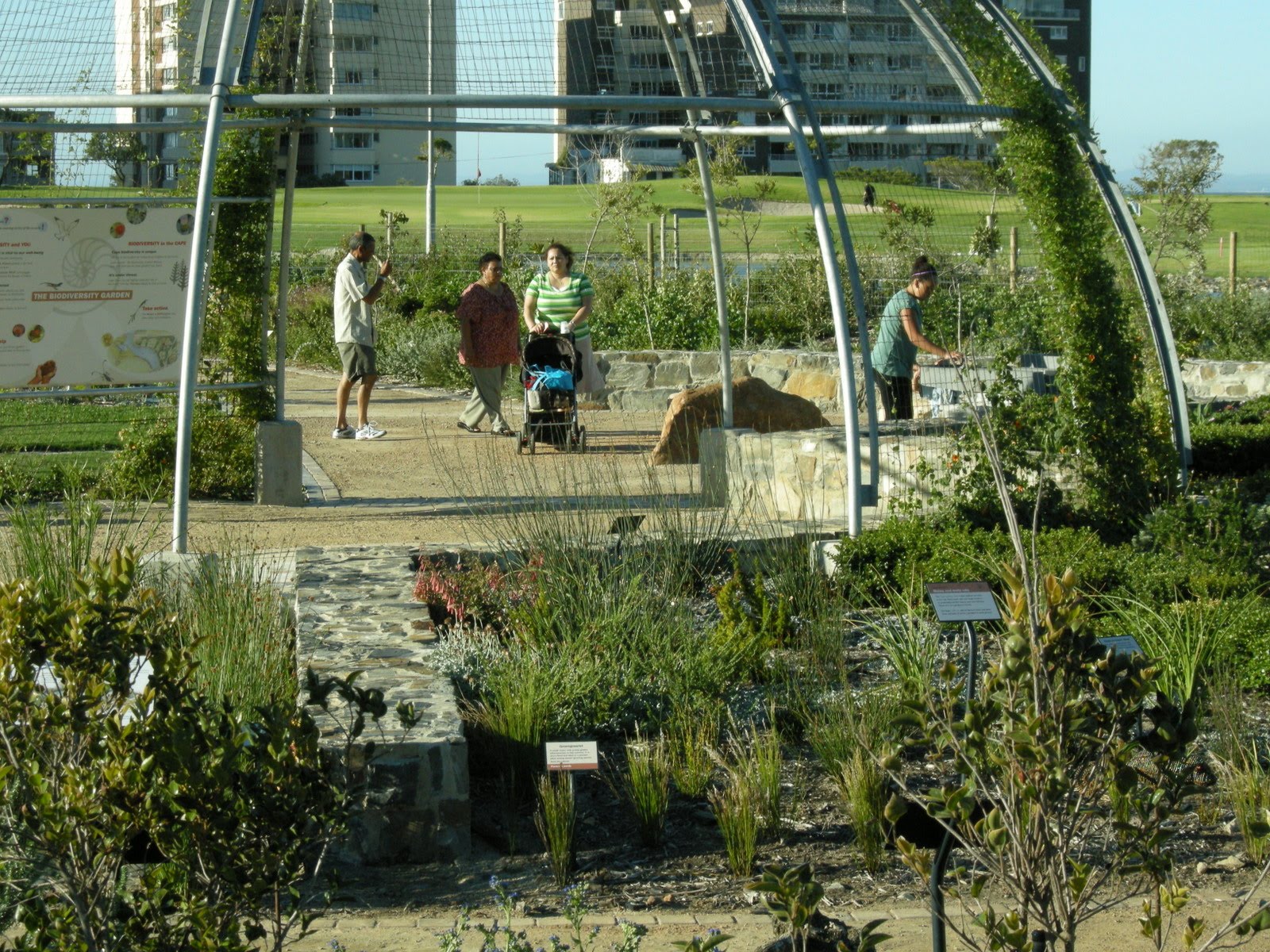
It is not an easy thing to evaluate, but I would say people are reading them. However the degree of interpretation part is harder to evaluate. A few storyboards in the Garden engage the reader directly - e.g. Look up to Signal hill - and so when you see someone looking up at the hill, then it's working.
 I noticed these two ladies read almost every single sign in the People and Plants theme area, and looked pretty absorbed. The lady in black was leaning forward - means the text is a bit too small.
 I just missed the moment: when this lady bent down to pick and smell a piece of wild rosemary - as invited by the storyboard: Reach out to the wild rosemary bush in front of you. Squeeze some leaves gently and smell your fingers. Would you cook with this herb?
John Roff was instrumental in co-writing the texts and finding opportunities to engage visitors. I find this kind of interpretation in action rewarding and exciting!

 A cold misty morning (13 degrees) and yet there was a group of school kids in the garden.
 Here Wendy Hitchcock is with a school group on another cold morning - playing a climate change game. I heard a roar of excitement and later I heard from Wendy that they were cheering for the roll of the dice which would create a mass extinction!
 The visitor's book is almost full. Many comments refer to people feeling proud of our City and what it has achieved (in the Park). There are hundreds of thank yous - a wonderful sense of gratitude.
 And then there are the visitors of a different kind: a bee collecting pollen from the sour fig, Carpobrotus acinaciformis. Plus 2 other insects.
 I was wondering why some climbers on the Dome had no leaves? One of the Kirstebosch guides pointed out this fat fellow - about 10cm long and as thick as a fat cigar. I wonder what moth or butterfly it will turn into?
 Visitors from the Stellenbosch municipality testing the Exercise equipment. And a small sample of folk going through the Biodiversity Garden last Friday, 19th May:


 On misty mornings the Garden is bejewelled with spider webs...it's magical.
Our goal is that people leave the Biodiversity Garden with an understanding of biodiversity and why we need it; a love for our natural heritage and the desire to care for it for future generations.
Are we achieving this goal? How does one measure whether it's working?
Although we've had a positive response from the public (in the visitor comments book, on radio phone-ins, emails, during guided walks) it remains a tricky thing to measure. How does one evaluate 'love' and a desire to care?
And the 'understanding of biodiversity' - how does one test someone's knowledge without putting them on the spot?
I would welcome any ideas you may have.